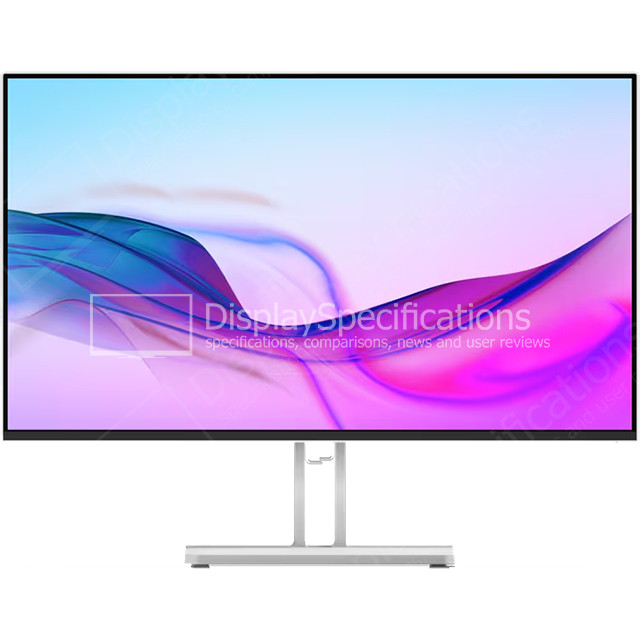
64.5" Philips 65OLED973/12 - Specifications
Brand, series, model
Information about the brand, series, model and model aliases.
| Brand Name of the company-manufacturer. | Philips |
| Series Name of the series, which the model belongs to. | OLED 9 |
| Model Designation of the model. | 65OLED973/12 |
| Model alias Other known designations of the model. | 754KB7 |
| Model year The year in which this model was announced. | 2018 |
Display
Information about the main characteristics of the display - panel, backlight, resolution, refresh rate, etc.
| Size class Size class of the display as declared by the manufacturer. Often this is the rounded value of the actual size of the diagonal in inches. | 64.5 in (inches) |
| Diagonal Approximate diagonal size of the display. If the manufacturer does not provide such information, the diagonal is calculated from the width and height of the screen. | 1639 mm (millimeters) 163.9 cm (centimeters) 64.5276 in (inches) 5.3773 ft (feet) |
| Width Approximate width of the display. If the manufacturer does not provide such information, the width is calculated from the diagonal and the aspect ratio. | 1650.24 mm (millimeters) 165.024 cm (centimeters) 64.9701 in (inches) 5.4142 ft (feet) |
| Height Approximate height of the display. If the manufacturer does not provide such information, the height is calculated from the diagonal and the aspect ratio. | 928.26 mm (millimeters) 92.826 cm (centimeters) 36.5457 in (inches) 3.0455 ft (feet) |
| Panel type There are various panel technologies. Each has its own specific features - viewing angles, color reproduction, response time, brightness/contrast, production cost, etc. The image quality depends directly on the type of the display panel used. | VA |
| Panel bit depth The most widely used panels are those with 6, 8, and 10 bits for each of the RGB components of the pixel. They provide 18-, 24-, and 30-bit color, respectively. | 10 bits (8 bits + FRC) |
| FRC Frame Rate Control (FRC) is a method, which allows the pixels to show more color tones. With quick cyclic switching between different color tones, an illusion for a new intermediate color tone is created. For example, by using FRC, a 6-bit display panel is able to show 16.7 millioin colors, which are typical for 8-bit display panels, and not the standard 262200 colors, instead. There are different FRC algorithms. | Yes |
| Colors The maximum number of colors, which the display is able to reproduce, depends on the type of the panel in use and color enhancing technologies like FRC. | 1073741824 colors 30 bits |
| Aspect ratio The ratio between the horizontal and the vertical side of the display. Some of the standard and widely used aspect ratios are 4:3, 5:4, 16:9 and 16:10. | 1.778:1 16:9 |
| Resolution Information about the number of pixels on the horizontal and vertical side of the screen. A higher resolution allows the display of a more detailed and of higher quality image. | 3840 x 2160 pixels Ultra HD (UHD) / 4K / 2160p |
| Pixel pitch The pixel pitch shows the distance from the centers of two neighboring pixels. In displays, which have a native resolution (the TFT ones, for example), the pixel pitch depends on the resolution and the size of the screen. | 0.43 mm (millimeters) 0.043 cm (centimeters) 0.0169 in (inches) 0.0014 ft (feet) |
| Pixel density Information of the number of pixels in a unit of length. With the decrease of the display size and the increase of its resolution, the pixel density increases. | 59 ppi (pixels per inch) 23 ppcm (pixels per centimeter) |
| Backlight The backlight is the source of light of the LCD display panels. The type of backlight determines the image quality and the color space of the display. There are various backlights such as CCFL, LED, WLED, RGB-LED, and etc. | Edge LED |
| Brightness Information about the brightness of the screen. It is measured in candela per square metre (cd/m²). | 220 cd/m² (candela per square meter) |
| Static contrast The static contrast shows the ratio between the brightest and the darkest color, which the display can reproduce simultaneously, for example, within one and the same frame/scene. | 3000 : 1 |
| Dynamic contrast The dynamic contrast shows the ratio between the brightest and the darkest color, which the display can reproduce over time, for example, in the course of playing a video. | 20000 : 1 |
| HDR HDR expands the contrast ratio (peak luminance and minimal black levels) and color palette to achieve more details across the whole image - from the darkest parts to the brightest ones, which results in more realistic and life-like image. | HDR10 |
| Horizontal viewing angle Information about the maximum horizontal viewing angle, within which the image on the screen is of acceptable quality. | 178 ° (degrees) |
| Vertical viewing angle Information about the maximum vertical viewing angle, within which the image on the screen is of acceptable quality. | 178 ° (degrees) |
| Minimum response time Information about the minimum amount of time, in which the pixels change from one color to another. Very often the manufacturer provides the response time for transition from grey-to-grey (G2G). | 6 ms (milliseconds) 0.0060 s (seconds) |
| Coating Information about the type of coating of the display. There are different types of matte and glossy coatings, each of which has its own advantages and drawbacks. | Glossy |
3D
3D displays use various technologies to achieve a 3D effect. Each of these technologies has its own advantages and drawbacks.
| 3D Information on whether 3D is supported or not. | No |
Frequencies
Information about the horizontal and vertical refresh rates/frequencies.
| Vertical frequency (digital) The vertical frequency/refresh rate shows how many times in a second the image on the screen is refreshed. | 50 Hz / 60 Hz (hertz) |
Power supply and consumption
Information about the power supply and consumption, energy efficiency class, etc.
| 220V Permissible voltage tolerance in a 220-volt electric system. | 220 V - 240 V (volts) |
| Alternating current frequency Requirement regarding the alternating current frequency in the electric system. | 50 Hz - 60 Hz (hertz) |
| Power consumption (off) Power consumption in off-mode. | 0.5 W (watts) |
| Power consumption (sleep) Power consumption in sleep/stand by/suspend mode. | 0.5 W (watts) |
| Power consumption (average) Average power consumption in standard work mode. | 200 W (watts) |
| Power consumption (maximum) The maximum possible power consumption. | 290 W (watts) |
| Energy efficiency class The energy efficiency class/label provides general idea about the power consumption. There are different energy efficiency classes and each sets its own requirements regarding the power consumption. Some of the existent energy efficiency classes are A+++, A++, A+, A, B, C, D, E, F, G. | A |
Dimensions, weight and color
Information about the dimensions and the weight of the specific model with and without stand as well as the colors, in which it is offered to the market.
| Colors Information about the colors, in which the specific model is offered to the market. | Black Silver |
Ergonomics
Information about the ergonomic functions - height adjustment, swivel angles, tilt angles, etc.
| VESA mount Information about whether there is a possibility for wall mounting according to the VESA Mounting Interface Standard (MIS). | Yes |
| Removable stand Information about whether the stand can be dismounted. Usually, this is required for wall mounting. | Yes |
| Height adjustment Information about whether the stand allows height adjustment. | No |
| Landscape/portrait pivot Some displays have the ability to operate in landscape and portrait mode alike. | No |
| Left/right swivel Information whether the display can be swiveled around the stand axis. | No |
| Forward/backward tilt Most displays have the ability to be tilted forward and backward as to provide a more comfortable viewing position for the user. | No |
TV tuner
The TV tuner is a device, which allows the receiving and visualization of a certain type of television signal. There are tuners for digital, analog, cable and satellite television.
| TV tuner Information about the TV tuners, which the current model is equipped with. | Analog (NTSC/PAL/SECAM) DVB-T DVB-T2 DVB-C |
Audio
Information about the audio system - number and power of the built-in speakers, supported audio technologies.
| Speakers The speaker is a device, which converts electrical audio signals into acoustic vibrations resulting in corresponding sounds. | 2 x 5 W (watts) |
Camera
Many contemporary desktop monitors and smart TV sets have built-in cameras.
| Camera Information whether the current model has a built-in camera or not. | No |
Network
Supported network technologies and standards for exchanging data with other devices.
| Network Information about the network technologies and standards supported by the model, which allow for it to connect to and communicate with other devices. | LAN Wi-Fi 802.11b (IEEE 802.11b-1999) 802.11g (IEEE 802.11g-2003) 802.11n (IEEE 802.11n-2009) Wi-Fi Direct |
Connectivity
Available connectivity ports, slots and interfaces.
| Connectivity Information about the available connectivity ports, slots and interfaces such as USB, infrared port, SD card slot, audio/video and network interfaces, etc. | 2 x USB 2.0 1 x Ethernet RJ45 2 x HDMI 2.0 (CEC) 1 x HDMI 2.0 (ARC; CEC) 1 x SCART 1 x AV Composite In 3.5 mm jack 1 x Video Component In 3.5 mm jack 1 x Optical Audio Out 1 x 3.5 mm Audio Out 1 x Antenna (RF) (female) 1 x CI+ 1.3 |
| High-bandwidth Digital Content Protection (HDCP) 2.2 |
Features
Some additional functional features of the model.
| Features Information about additional software features, technologies, functions and services of the model. | PVR |
Image file formats
Smart TV sets allow the display of different image file formats.
| Image file formats Information about some of the main image file formats supported by the current model. | JPEG GIF PNG |
Audio file formats
Smart TV sets allow playing different audio file formats.
| Audio file formats/codecs Information about some of the main audio file formats/codecs supported by the current model. | AAC (Advanced Audio Coding) AC3 / AC-3 MP3 (MPEG-2 Audio Layer II, .mp3) WMA (Windows Media Audio, .wma) WAV (Waveform Audio File Format, .wav, .wave) |
Video file formats
Smart TV sets allow playing various video file formats.
| Video file formats/codecs Information about some of the main video file formats/codecs supported by the current model. | 3GPP (3rd Generation Partnership Project, .3gp) AVI (Audio Video Interleaved, .avi) ASF (Advanced Systems Format, .asf .wma .wmv) H.263 H.264 / MPEG-4 Part 10 / AVC video H.265 / MPEG-H Part 2 / HEVC MKV (Matroska Multimedia Container, .mkv .mk3d .mka .mks) QuickTime (.mov, .qt) MP4 (MPEG-4 Part 14, .mp4, .m4a, .m4p, .m4b, .m4r, .m4v) MPEG-4 VP9 WMV (Windows Media Video, .wmv) WMV9 (Windows Media Video 9, .wmv) |
Operating and storage conditions
There are certain requirements for the environmental conditions, in which the display should be used and stored in order to function properly.
| Operating temperature The operating temperature shows the safe temperature range (from minimum to maximum), within which the display will function flawlessly. Outside this range it might operate improperly and/or fail entirely. | 5 °C - 35 °C (degrees Celsius) 41 °F - 95 °F (degrees Fahrenheit) |